Eastern subterranean termites cause structural damage by exploiting high soil moisture along masonry foundations and entering structural sills through microscopic mortar joints. In Richmond neighborhoods featuring…
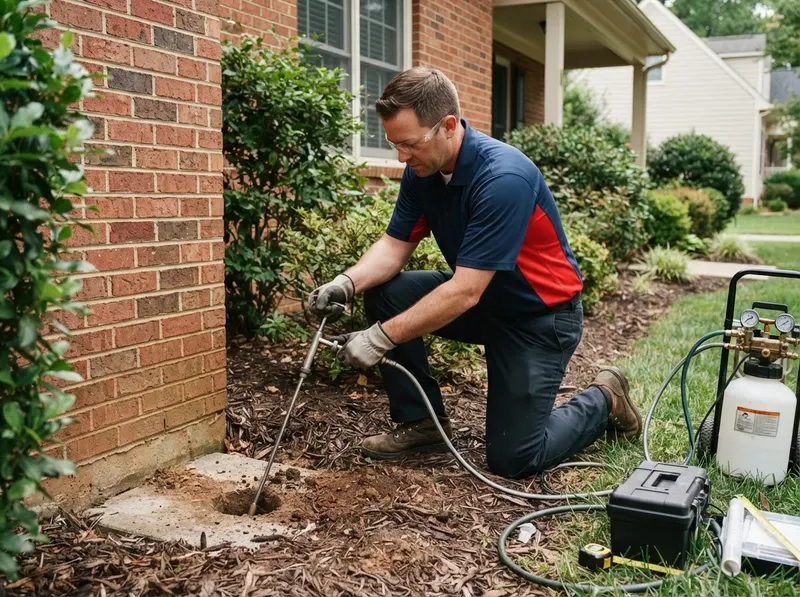
Eastern subterranean termites cause structural damage by exploiting high soil moisture along masonry foundations and entering structural sills through microscopic mortar joints. In Richmond neighborhoods featuring historic architectural footprints, such as continuous brick piers in Church Hill, rubble-stone party walls in Shockoe Slip, and ground-level joists in The Fan and Jackson Ward, termite workers transit undetected through interior masonry voids. The subterranean termite remediation process bypasses ineffective retail hardware sprays, deploying an undetectable non-repellent termiticide barrier directly into trench lines excavated 6 inches deep and 6 inches wide along foundation walls, or installing exterior monitoring stations spaced at 10-foot intervals.
The mechanical approach depends strictly on foundation construction type and soil conditions. For ventilated crawl spaces common in Ginter Park, Bellevue, and Forest Hill, remediation requires trenching interior crawl space perimeter footings alongside exterior foundation perimeters. When structural slabs in Museum District row houses or slab-on-grade commercial spaces in Carytown prevent standard exterior trenching, remediation requires precision sub-slab horizontal rod injection through 1/2-inch holes drilled every 12 inches through interior concrete. The deliberate operational trade-off sits between immediate liquid exclusion barriers, which deliver instant localized perimeter toxicity to workers, and slow-acting insect growth regulator bait arrays, which take 60 to 90 days to achieve complete colony collapse but eliminate the physical disturbance of drilling interior structural floors.
Termite workers require a minimum soil moisture content of 15% to 20% to avoid desiccation while mining timber framing. In the damp red clay of Chesterfield County and Henrico County bordering the James River Park System, subterranean termites sustain high colony densities near downspout collection points and poorly graded foundation edges. Soil trenching saturates backfill with 4 gallons of termiticide emulsion per 10 linear feet per foot of depth, adhering to Virginia Department of Agriculture and Consumer Services (VDACS) application regulations. Remediating mud tubes on brick support pillars ensures structural sills retain their compressive integrity without continuous chemical dependence.
Every job gets a firm, written price after a free on-site visit.
Tell us about your subterranean termite remediation job in Richmond and we'll send a clear, written quote, usually the same day.
 Delvixa Pest Elimination