Structural thermal eradication functions on thermodynamic mortality limits: ambient heat raised above 122°F disrupts bed bug cellular protein structures instantly, eliminating adults, nymphs, and eggs in a single…
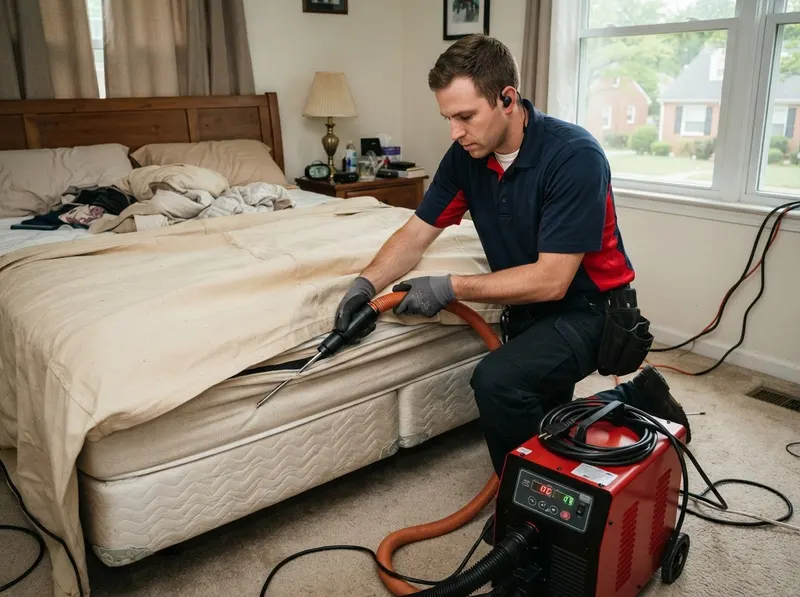
Structural thermal eradication functions on thermodynamic mortality limits: ambient heat raised above 122°F disrupts bed bug cellular protein structures instantly, eliminating adults, nymphs, and eggs in a single deployment. In older Richmond housing inventories, such as historic brick rowhouses throughout The Fan, Church Hill, and Jackson Ward, insects leverage deep mortar gaps, plaster lathe cavities, and century-old hardwood subfloors where conventional surface sprays fail to contact. High-output thermal convective systems circulate heated air continuously through these structural recesses, penetrating up to 4 inches into insulation and wall cavities to neutralize harborages behind baseboards and electrical cover plates.
Selecting whole-structure thermal remediation over repeat pesticide applications resolves the failure loop of retail synthetic pyrethroid treatments, to which regional bed bug populations show documented physiological resistance. The primary operational trade-off centers on site preparation: thermal eradication demands the removal or protective shielding of pressurized items, heat-sensitive electronics, wax, and oil paintings before system activation. Properties in multi-unit neighborhoods like Shockoe Slip or mixed-use retail corridors in Carytown require targeted thermal barriers along shared party walls to halt lateral migration toward adjacent living units during the heat cycle.
Execution protocol follows three calibrated operational steps across every deployment:
1. Premise thermal profiling and isolation: Technicians position wireless thermocouple sensors inside core wall voids, mattress seams, and subfloor corners to monitor structural temperature in real time.
2. Convective heat saturation: Specialized electric or indirect-fired heating units elevate ambient indoor temperatures to the target range of 122°F to 135°F, sustaining this threshold for a minimum of 4 continuous hours to ensure thermal soak throughout dense materials.
3. Tactical cool-down and post-treatment sensor audit: The site undergoes gradual thermal reduction to prevent structural warping, followed immediately by visual inspection and barrier dust placement inside dry perimeter cavities to establish definitive containment.
Properties bordering the James River Park System, Forest Hill, Bellevue, and Ginter Park frequently encounter elevated baseline humidity, requiring sustained airflow balancing so moisture does not suppress ambient heat transmission. Delvixa Pest Elimination deploys discrete, unmarked service vehicles to protect residential privacy throughout dense districts near the Virginia Museum of Fine Arts and Maymont. Thermal eradication eliminates ongoing multi-week retreatments, delivering immediate structural clearance without binding property owners to multi-year extermination contracts.
Every job gets a firm, written price after a free on-site visit.
Tell us about your bed bug thermal eradication job in Richmond and we'll send a clear, written quote, usually the same day.
 Delvixa Pest Elimination